There are many ways to stop rust or corrosion. The choice of surface treatment (commonly referred to as “coating”) depends on the type of metal, its environment, and how it will be used. Some treatments are designed for temporary protection, such as protecting metal during storage or transport, while others provide long-term, ongoing protection for metal parts that are in use and/or exposed to harsh conditions. The best coating or surface treatment to protect your metal parts depends on factors like the type of metal, its exposure to the elements, and whether they will be regularly used or stored.
Rust prevention methods range from traditional coatings like paint and powder coating to more specialized solutions like Vapor Corrosion Inhibitors (VCI) and desiccants. However, not all are suitable if preserving the original surface of the metal part or object is important. In such cases, paint and powder coating may not be the best options. So, what alternatives are there to stop rust without using these coatings? Let’s take a look at a few effective options.
How Does Rust Form?

Rust, or iron oxide, forms when iron or steel comes into contact with oxygen and moisture over time. This natural reaction, called oxidation, weakens the structural integrity of metal and changes its appearance. Preventing rust without using paint involves interrupting one or both parts of this process—either by blocking oxygen or removing moisture from the environment. Keep in mind that the process of corrosion for other metals can vary. While moisture and oxygen are usually key causes, some metals may corrode under different conditions or due to exposure to specific chemicals.
The simplest way to prevent rust is by stopping either oxygen or moisture from making contact with the surface of metal. Paint is commonly used as a barrier to block oxygen and moisture, but it’s not always practical or desired. Thankfully, several alternative methods are available to protect metal surfaces.
9 Ways to Stop Rust Without Paint
Why wouldn’t paint or powder coating be an effective way to prevent rust? Paint is applied as a liquid to the surface of a metal part or object creating a protective barrier that blocks moisture and oxygen—two key contributors to rust. However, paint can wear down easily over time; it chips, cracks, and requires regular maintenance and reapplication to remain effective. Powder coating also forms a protective barrier by applying a dry powder, which is then hardened with heat to create a strong, long-lasting finish. While it offers superior durability compared to paint, powder coating can be expensive and requires specialized equipment for application. Additionally, both paint and powder coating can interfere with connections or moving parts and alter the metal’s appearance, potentially ruining the natural finish if a metal exterior is preferred.
While paint and powder coating are effective, they’re now always the best choice. Without them, metal parts and objects can be vulnerable to corrosion. While not all metals rust, all metals can corrode if they are not properly protected. So, what are the alternatives to prevent rust when paint and powder coating aren’t viable options?
1. Desiccants

Desiccants are materials that remove moisture from the air, keeping the surrounding environment dry. There are many different types of desiccants, such as silica gel, activated clay, and calcium chloride. These are frequently used to protect metal parts during packaging, in toolboxes, and within storage or shipping containers. Desiccants function through either adsorption or absorption to remove moisture, preventing water from interacting with metal surfaces and stopping rust formation.
Desiccants work best in sealed or enclosed spaces where moisture exposure is limited, allowing them to maintain a dry environment over time. However, they are less effective in environments where metal parts are frequently handled or repeatedly exposed to moisture or outdoor conditions. Since desiccants are designed for controlled environments, their effectiveness diminishes as they become saturated or when new moisture is continuously introduced.
- Best For: Enclosed spaces like packaging, tool storage, packaging, or machinery in transit, and metal parts storage in high-humidity environments.
How much desiccant do you need to protect your metal parts?
Use our desiccant calculator >
2. Vapor Corrosion Inhibitors (VCI)
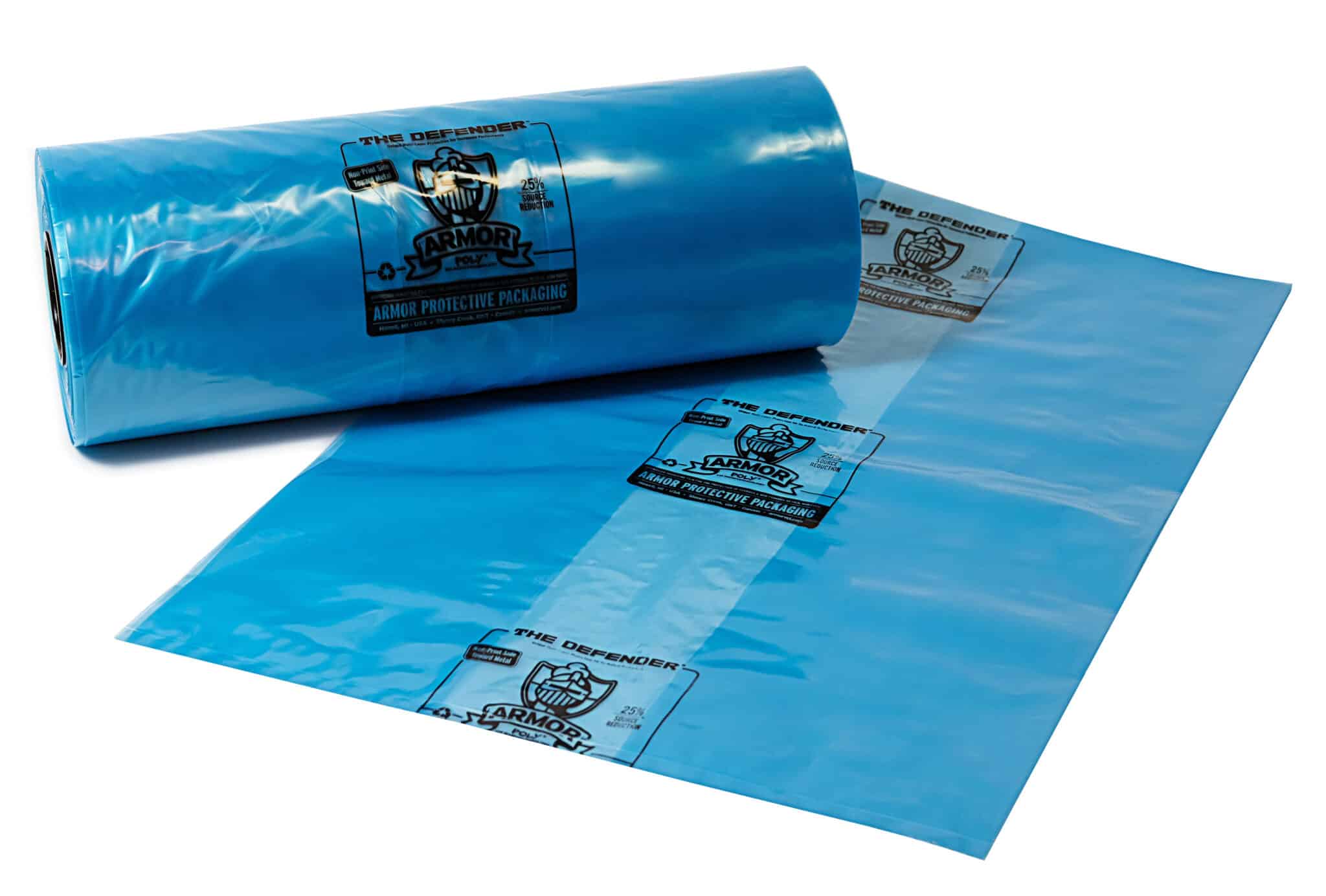
VCI packaging materials—such as paper or poly film bags—release corrosion inhibitors that vaporize and form a thin, invisible layer on metal surfaces, repelling moisture and other corrosive elements to prevent rust. Simply wrap or enclose metal parts in VCI materials for effective protection. VCI works best in sealed or enclosed spaces where its protective vapors can be contained, making it an ideal solution for storage, packaging, or transit. However, it is not designed for active, in-use equipment that is continuously exposed to the elements, such as outdoor machinery or vehicles in operation.
- Best For: Protecting equipment, machinery parts, tools, and electronics during storage or transport.
Choose from VCI paper, film, emitters, and special dual VCI/desiccant products to protect your metal parts in the best way possible.
Shop VCI >
3. Air-Tight Containers

Sealing metal objects in air-tight containers helps minimize exposure to oxygen and moisture, two key contributors to rust formation. When combined with VCI products or desiccants, air-tight storage creates a more controlled, rust-resistant environment for metal parts. Vacuum-sealed bags operate in the same way and can also be an option for smaller items.
- Best For: Long-term storage of tools, hardware, and small machinery parts.
4. Grease or Oil Coatings
Coating metal with a layer of grease or oil creates a physical barrier that prevents oxygen and moisture from reaching the surface. This method is widely used in automotive, industrial, and marine applications, with specialized anti-corrosion greases and oils providing additional protection. However, because grease and oil coatings must be applied and removed, the process can be labor- and resource-intensive, requiring significant time and effort. Additionally, it may pose health risks due to the use of solvents and cleaners, which can be hazardous if proper safety precautions are not followed.
- Best For: Exposed machinery, automotive parts, and marine equipment.
5. Wax or Polymer Coatings
Wax and polymer-based coatings provide a clear, protective layer over metal surfaces. These coatings are water-repellent and durable, often withstanding abrasion, making them suitable for tools and outdoor equipment.
- Best For: Tools, metal furniture, and outdoor fixtures.
6. Galvanization
Galvanization involves coating metal, usually steel, with a layer of zinc. The zinc acts as a protective shield that corrodes before the steel underneath. Even if the zinc coating is damaged, the zinc will continue to corrode, protecting the steel.
- Best For: Structural steel, outdoor fences, and industrial equipment.
7. Anodizing
Anodizing is an electrochemical process that thickens the natural oxide layer on metals such as aluminum. This enhanced oxide layer increases the metal’s corrosion resistance and improves surface durability by making it harder and more resistant to environmental damage.
- Best For: Aluminum products like cookware, window frames, and electronic casings.
8. Cathodic Protection
Cathodic protection involves attaching a sacrificial anode made of a more reactive metal, such as zinc or magnesium, to the object you want to protect. The anode corrodes instead of the main metal, preventing rust and corrosion from forming on the protected metal part or object. This is commonly used in pipelines and marine environments.
- Best For: Pipelines, ships, storage tanks, and submerged structures.
9. Regular Maintenance
Sometimes, the simplest methods are the most effective. Keeping metal surfaces clean and dry can significantly delay rust formation, as moisture and contaminants are the primary causes of corrosion. Regularly wiping down tools or applying protective sprays adds an extra layer of protection, further delaying rust and oxidation.
- Best For: Day-to-day use of tools, appliances, and machinery.
Choosing the Right Method
The best rust prevention method depends on the environment, usage, and type of metal you’re protecting. By understanding how rust forms and the different ways to prevent it—without the need for paint or powder coating—you can extend the life of metal parts, tools, equipment and other objects, saving time, money, and effort in the long run.
To discover a range of clean, safe, and highly effective solutions for rust prevention, take a look at our rust prevention products, designed to protect your metal parts in nearly any situation.